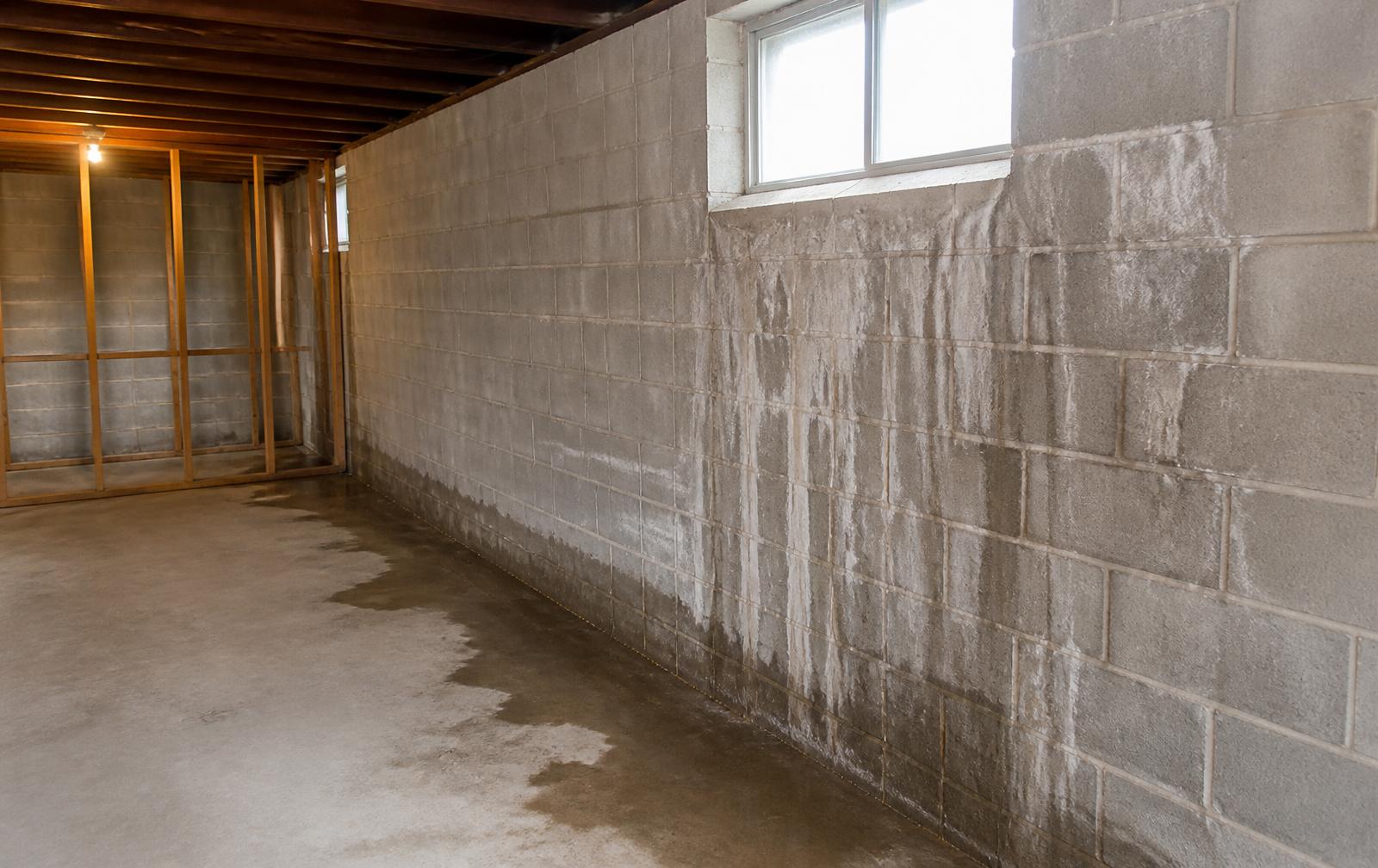
What Causes a Wet Basement?
Almost every wet basement in Pennsylvania comes down to one sequence: water accumulates in the soil around your foundation, pressure builds, and the water enters through the easiest available opening. Fixing it means interrupting that sequence — reducing how much water arrives, relieving the pressure that builds, and closing the openings it uses.
The reason quotes for the same basement vary so much is that contractors are proposing different points of interruption. Understanding which point applies to your house is the most valuable thing you can do before signing anything.
Signs of a Wet Basement, From Mild to Urgent
Early Warning Signs
- Musty or earthy smell that returns every wet season
- Efflorescence — white powdery mineral crust — on walls or floor
- Damp patches that darken during rain and fade afterward
- Rust on the bottoms of appliances, shelving legs or furnace panels
- Peeling paint or bubbling floor paint near the perimeter
Active Water Problems
- Visible seepage at the floor-wall joint
- Water tracking down a crack during storms
- Standing water after heavy rain
- Mold on stored boxes, wood framing or drywall
- Sump pump running frequently or continuously
Signs That Need Attention Now
- Bowing, leaning or horizontally cracked walls
- Stair-step cracking in block foundations
- Sagging or soft floors above the basement
- Repeated flooding with standing water inches deep
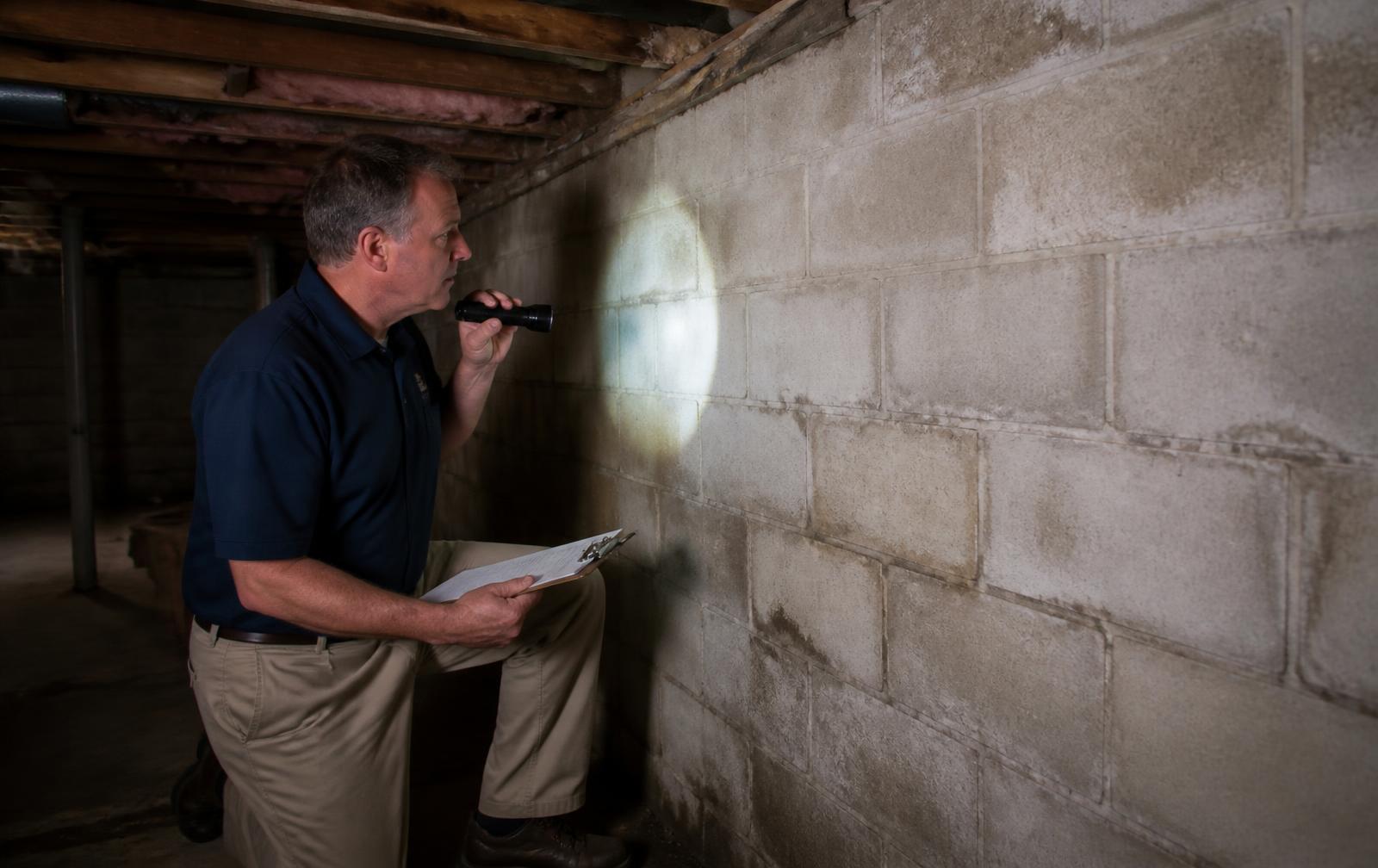
Six Common Causes of Wet Basements
- Roof water dumped at the foundation. A single storm can send hundreds of gallons off your roof into the soil beside the wall if downspouts discharge short.
- Grade sloping toward the house. Settled backfill, added mulch beds and new patios all quietly reverse the slope over the years.
- Hydrostatic pressure under the slab. Saturated soil pushes water up through the cove joint and floor cracks.
- Failed or missing footing drains. Original drains silt shut; many older Pennsylvania homes never had one.
- Cracks and penetrations. Shrinkage cracks, tie-rod holes and pipe sleeves become direct water paths.
- Wall-body saturation. Stone, brick and block absorb and transmit water when exterior protection has failed.
What Fixes Each Type of Basement Water Problem
- Water at the floor joint on several walls: interior drainage system.
- Water running down one crack: crack injection.
- Wet wall body, deteriorating masonry: exterior waterproofing.
- Water only during heavy storms: rain-triggered water — start with gutters and grading.
- Fast, deep water: see basement flooding.
- Pit fills but water stays: pump replacement or backup.
- Dampness and odor without visible water: humidity control plus moisture and mold management.
How Much Does Wet Basement Repair Cost?
| Work | Typical range | What drives the price |
|---|---|---|
| Gutter, downspout and grading corrections | $300 – $5,000+ | Extension length, soil volume, buried lines |
| Crack or penetration repair | $400 – $1,500+ | Crack count, wall thickness, method |
| Sump pump replacement or new pit | $500 – $3,000+ | Existing pit, pump size, backup |
| Interior drainage system | $3,000 – $10,000+ | Perimeter footage, sump, wall liner |
| Exterior waterproofing | $4,000 – $15,000+ | Walls treated, depth, access, restoration |
Actual prices vary based on basement size, foundation type, water source, access, drainage requirements, excavation needs and chosen waterproofing method. See the full Pennsylvania cost guide.
How to Compare Basement Waterproofing Contractors
- Ask each one to state the water source, not just the product they install
- Get the scope in writing: footage, materials, stone spec, pump model
- Confirm they are insured and, where required, registered in Pennsylvania
- Read the warranty — what it covers, for how long, and whether it transfers
- Get at least two or three quotes for anything over a few thousand dollars
Explore the specific problem or fix
Basement Waterproofing by Pennsylvania City
Local pages with the foundation types, soils and drainage issues specific to each area.
Frequently asked questions
- Is a wet basement normal in Pennsylvania?
- It is common, but it is not something you have to live with. Pennsylvania's clay soils, freeze-thaw cycles and older housing stock make seepage frequent — and all of it is fixable with the right drainage approach.
- Can I fix a wet basement myself?
- You can and should handle the outside water: clean gutters, extend downspouts ten feet from the house, and correct grade so it slopes away. Those alone solve a meaningful share of mild cases. Below-slab drainage and wall work need a contractor.
- How much does wet basement repair cost?
- Small corrections run a few hundred dollars. A crack injection is typically $400 to $1,500. A full interior drainage system with a sump is usually $3,000 to $10,000 or more, and exterior waterproofing runs higher.
- Does a dehumidifier fix a wet basement?
- A dehumidifier manages the air, not the water source. It is a good companion to a repair and a poor substitute for one — running it against active seepage just raises your electric bill.
- Will a wet basement hurt my home's value?
- Yes. Water stains and musty odor are among the first things buyers and inspectors flag, and a documented, warrantied repair is far easier to sell than an unexplained damp basement.
- How long does the repair take?
- Crack injection is usually a few hours. An interior drainage system typically takes one to three days. Exterior excavation runs several days to more than a week per wall.