What Causes Wet Basements in Philadelphia?
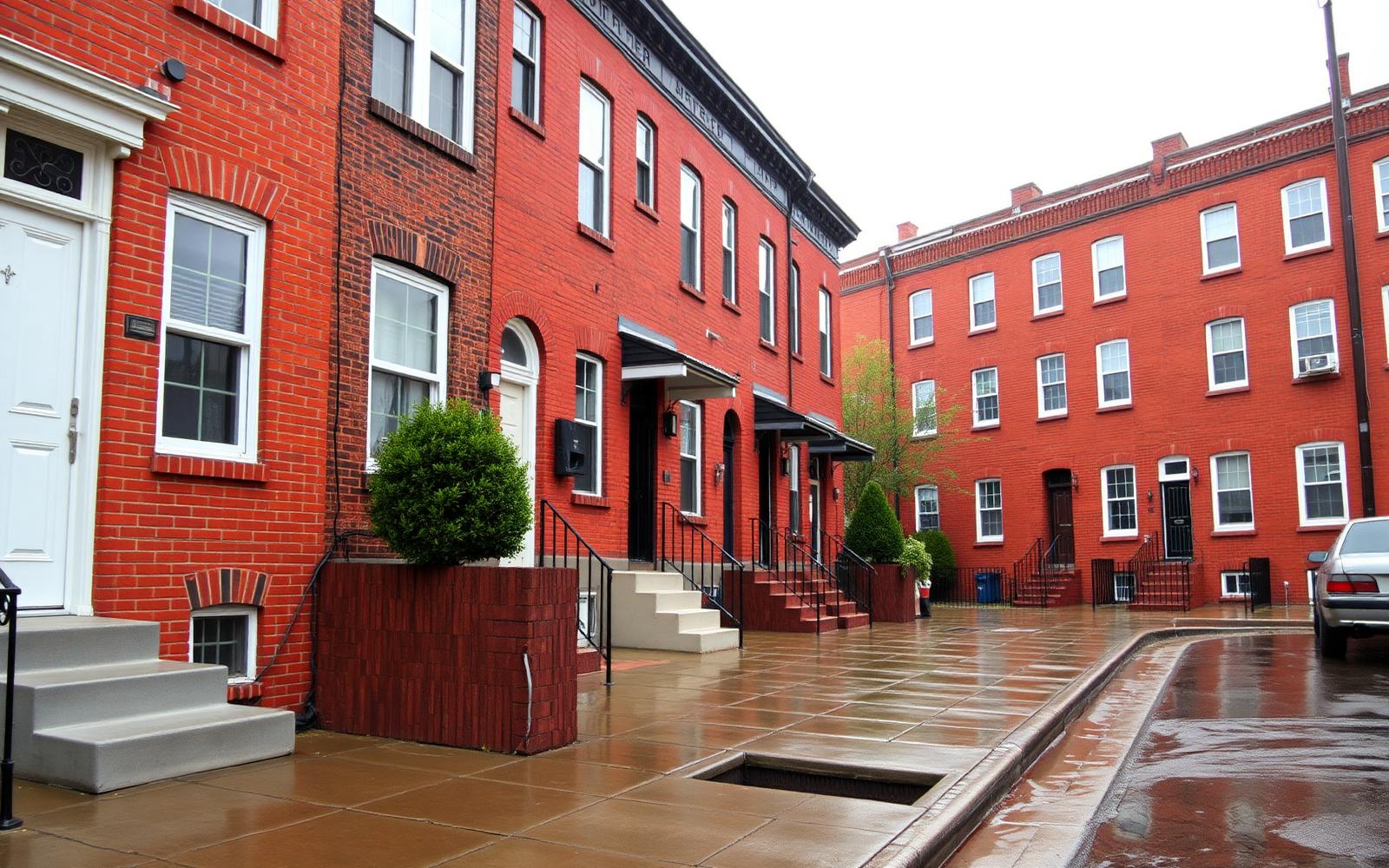
Philadelphia's housing stock is older and tighter than almost anywhere else in the state. Rowhouses sit shoulder to shoulder with no side yard, which removes exterior excavation from the table for most of the perimeter and makes interior drainage the practical default. At the same time, many cellars are shallow, with low headroom, stone or brick walls and slabs poured decades after the house was built.
The water itself usually comes from three sources: roof and street runoff with nowhere to infiltrate, groundwater in the low-lying river-adjacent neighborhoods, and the city's combined sewer system, which surcharges during downpours and can push water back up basement floor drains.
Because so much of the city is impervious surface, storms produce fast, concentrated runoff. Homeowners in Philadelphia often describe water arriving within minutes of a heavy downpour — a surface-water signature rather than a slow groundwater rise.
Philadelphia Housing Stock and Foundation Types
Rowhouses and trinities
Party walls mean your neighbor's downspout, grading and basement conditions affect yours. Work is almost always done from inside, and coordination with neighbors matters when a shared wall is the leaking one. Low ceiling heights make slab work tight but entirely feasible.
Stone and brick cellar walls
In older sections — South Philadelphia, Fishtown, Germantown, West Philadelphia — walls are rubble stone or brick with lime mortar. These absorb and transmit water through the wall body, so repointing, parging and a wall liner tied into drainage typically outperform any surface coating.
Twins and detached homes in the Northeast and Northwest
Larger lots in Roxborough, Chestnut Hill, Mount Airy and the Northeast do allow exterior excavation on at least one wall, which opens up membrane work and rebuilt footing drains as an option.
Converted and finished basements
Many Philadelphia basements have been finished for rental units or extra living space. When water shows up, the cost conversation shifts quickly to how much finished work has to be opened to reach the cove joint.
Local Soil, Drainage and Weather Conditions
- Dense impervious surfaces producing rapid, high-volume storm runoff
- Combined sewer system that can surcharge and back up through floor drains
- Low-lying neighborhoods near the Delaware and Schuylkill with high water tables
- No side yards on rowhouse blocks, ruling out most exterior excavation
- Shared party walls where a neighbor's water becomes your water
- Century-old lime mortar that erodes with repeated saturation
- Downspouts tied into old, often broken, buried drain lines
- Sidewalk vaults and coal chutes that leak at the pavement line
Most Common Basement Problems in Philadelphia
- Water coming up through the cellar floor drain during heavy storms
- Seepage along the party wall shared with a neighbor
- Damp, crumbling mortar in a stone cellar wall
- Musty smell in a finished basement apartment
- Water entering under the front steps or from the sidewalk vault
- Sump pump replacement in a shallow cellar with limited pit depth
Basement Waterproofing Cost in Philadelphia
| Work | Typical range | What drives the price |
|---|---|---|
| Interior drainage, rowhouse rear/side walls | $3,500 – $7,000+ | Footage, low headroom, debris removal through the house |
| Full perimeter interior system | $6,000 – $11,000+ | Party walls, new pit, wall liner |
| Repointing and parging stone cellar walls | $10 – $30+ per sq ft | Mortar condition and wall area |
| Sump pit and pump installation | $1,200 – $3,000+ | Shallow slab, discharge routing to the street or rear |
| Crack injection | $400 – $1,400+ | Poured walls in newer construction |
Actual prices vary based on basement size, foundation type, water source, access, drainage requirements, excavation needs and chosen waterproofing method. Compare methods statewide in the Pennsylvania cost guide.
Neighborhoods and Nearby Areas Covered
Professionals in the network serve Center City, South Philadelphia, Fishtown and Kensington, Northern Liberties, Brewerytown, Fairmount, West Philadelphia and University City, Germantown, Mount Airy, Chestnut Hill, Roxborough and Manayunk, the Greater Northeast, plus nearby Delaware, Montgomery and Bucks County communities.
Areas & ZIP Codes We Serve
Serving homeowners throughout Philadelphia County and the surrounding suburbs, including 19103, 19104, 19111, 19120, 19124, 19128, 19144 and 19147, plus surrounding communities. Local area codes are 215 / 267 / 445 — enter your ZIP code in the form and your request goes to a professional who works in Philadelphia regularly.
Which service do you need?
Frequently asked questions
- Can a Philadelphia rowhouse basement be waterproofed at all?
- Yes — interior drainage systems were essentially made for rowhouses. Work happens entirely inside, so no side yard, no excavation and no neighbor negotiations are needed for the drainage itself.
- What if the water is coming through the party wall?
- It is common. Interior drainage along that wall captures the water on your side. If the source is clearly your neighbor's downspout or grading, a conversation with them can be the cheapest fix available.
- Why does water come up my floor drain during storms?
- That pattern points to the combined sewer surcharging rather than groundwater. The remedy is different — typically a backwater valve — so mention it specifically when you request an estimate.
- My cellar has only six feet of headroom. Is that a problem?
- It makes the work tighter and slower, and it can affect equipment choice and debris handling, but it does not prevent a drainage system from being installed properly.
- Do Philadelphia contractors need to be registered?
- Home improvement contractors working in Pennsylvania generally must be registered with the state Attorney General's office, and Philadelphia has its own licensing requirements. Ask for both, plus proof of insurance, before signing.