What Is Basement Waterproofing?
Basement waterproofing is the work of controlling water around and inside a foundation so the basement stays dry. In practice a waterproofing contractor does three things: finds where water is entering, chooses a method that intercepts or blocks it, and gives the water a controlled path out of the house. Everything else — the vapor barriers, the pumps, the drain tile, the sealants — is a tool in service of those three steps.
That is the difference between a waterproofed basement and a painted one. Masonry sealers and waterproof paint change how a wall looks and can slow surface dampness, but they cannot hold back water pushing from the outside. Once the soil around your foundation is saturated, water arrives under pressure, and pressure needs a drain, not a coating.
Signs Your Basement Needs Waterproofing
- Water or damp streaks along the joint where the wall meets the floor
- Puddles that appear in the same corner after every long rain
- White chalky efflorescence or bubbling paint on block or poured walls
- A sump pump cycling constantly, or a pit that stays bone dry while the floor is wet
- Musty smell, condensation on ductwork, rusting metal legs and shelving
- Loose or spalling mortar joints in older stone and brick foundations
- Cracks that weep water during storms
What Causes Water in a Pennsylvania Basement?
Across Philadelphia rowhomes, Pittsburgh hillside houses, Lehigh Valley twins and Susquehanna Valley ranchers, the same handful of causes show up again and again:
- Hydrostatic pressure. Saturated soil holds water against the wall and under the slab; it finds the cove joint, the block cores and any crack.
- Surface water mismanagement. Short downspout extensions, clogged gutters, buried and collapsed drain lines, patios sloping toward the house.
- Negative or settled grading. Backfill settles over decades until the yard tilts back toward the foundation.
- Foundation cracks and failing mortar. Shrinkage cracks in poured walls, deteriorated joints in stone and block.
- Failed or missing drainage systems. Original footing drains that silted shut decades ago; interior systems installed without adequate outlet.
- Undersized or neglected sump systems. One pump handling volume that needs a larger pit, higher capacity, or a backup.
Basement Waterproofing Methods Explained
Interior Waterproofing and Basement Drainage Systems
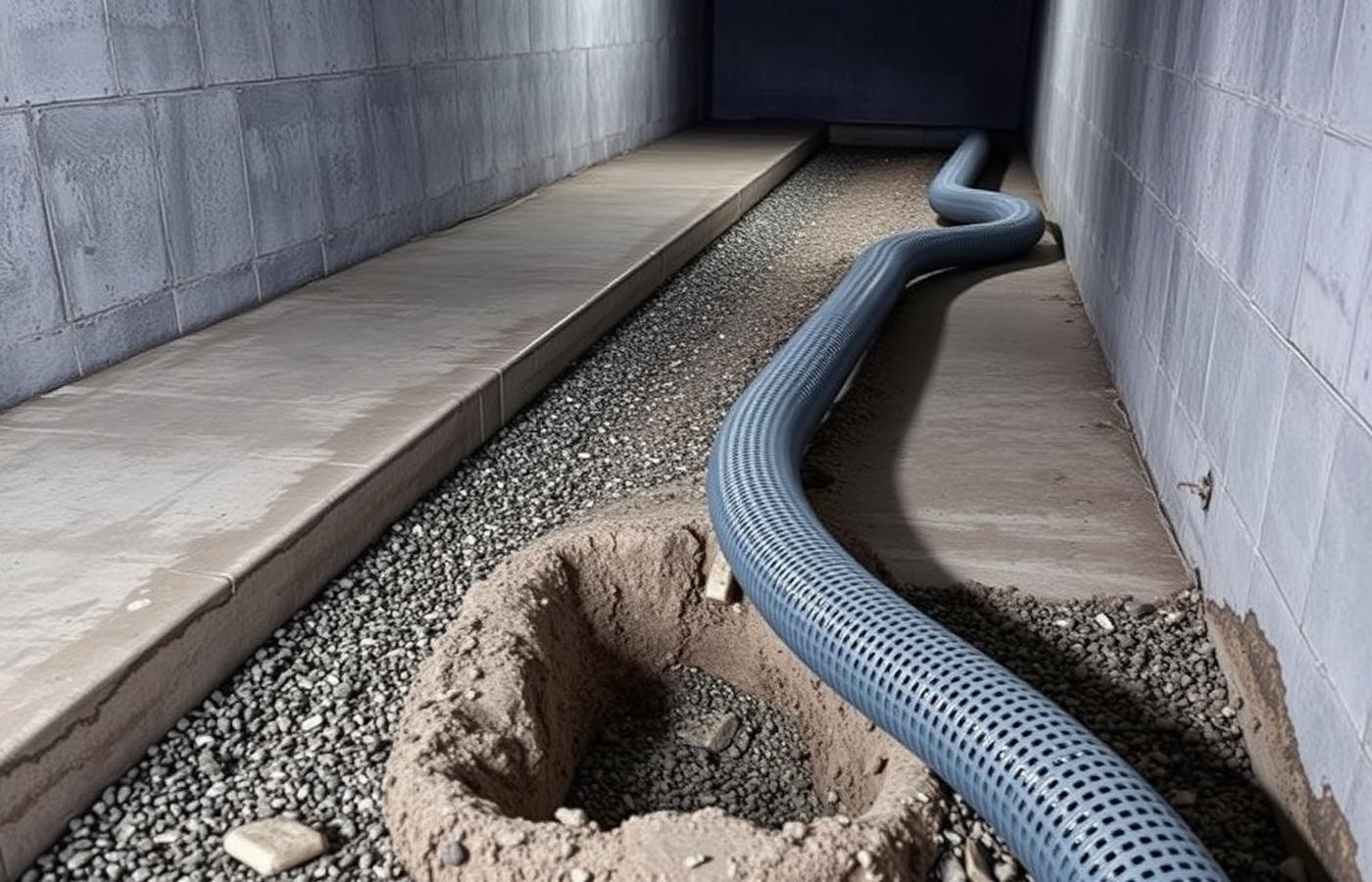
The contractor cuts the slab around the perimeter, installs drain tile in washed stone, ties the wall-floor joint into the drain, and discharges to a sump pump. Block walls are often drilled at the base so water trapped in the cores can escape into the drain. Interior waterproofing is the workhorse method in Pennsylvania because it works from inside, in any weather, without disturbing landscaping.
Exterior Basement Waterproofing
Exterior waterproofing excavates to the footing, cleans and repairs the wall, applies a waterproofing membrane, adds drainage board and rebuilds the footing drain in clean stone. It is the most thorough approach and the most expensive, and it is the right call when the wall itself needs attention or the basement is finished and cutting the slab is unacceptable.
Targeted Repairs: Cracks, Pipe Penetrations and Window Wells
When a single defect is the source, foundation crack repair by polyurethane or epoxy injection solves it for a fraction of a full system. Foundation waterproofing covers the wall-level work — parging, membranes, drainage board — that protects the structure itself.
Interior vs Exterior Waterproofing: Which Applies to Your Basement?
- Interior system: water at the cove joint or through block walls, city lots, attached homes, limited exterior access, budget-sensitive projects.
- Exterior system: deteriorated stone or brick foundations, finished basements you do not want opened up, homes where regrading and drainage rebuilds are being done anyway.
- Crack injection: one or two identifiable non-structural cracks in a poured wall that leak during rain.
- Sump work only: the existing drainage is sound but the pump is undersized, aging or has no backup.
How Much Does Basement Waterproofing Cost?
| Work | Typical range | What drives the price |
|---|---|---|
| Foundation crack injection | $400 – $1,500+ per crack | Crack length, width, wall thickness and access |
| Sump pump installation or replacement | $700 – $2,500+ | New pit vs. existing, pump capacity, battery backup, discharge run |
| Interior French drain | $50 – $120+ per linear foot | Slab thickness, obstructions, wall type, spoil removal |
| Full interior waterproofing system | $3,000 – $10,000+ | Perimeter footage, pump and wall vapor barrier scope |
| Exterior waterproofing | $8,000 – $15,000+ | Excavation depth, landscaping, decks, driveways and utilities in the way |
Actual prices vary based on basement size, foundation type, water source, access, drainage requirements, excavation needs and chosen waterproofing method. Very large or complex projects — deep foundations, multiple walls, structural repair combined with drainage — commonly run $15,000 to $20,000 or more. See the full basement waterproofing cost guide for line-by-line ranges.
What Affects Basement Waterproofing Price
- Linear feet of wall being drained, and how many walls are involved
- Foundation type: poured concrete, block, brick or fieldstone
- Slab thickness and whether the concrete is reinforced
- Whether a new sump pit and discharge line are needed
- Obstructions: furnaces, water heaters, finished walls, stored belongings
- Excavation depth, utility locations and landscaping to restore
- Warranty terms and whether a battery backup pump is included
Explore the specific methods
Basement Waterproofing by Pennsylvania City
Local pages with the foundation types, soils and drainage issues specific to each area.
Frequently asked questions
- Does basement waterproofing actually stop water permanently?
- A properly designed system manages water permanently, but it has to match the water source. Interior drainage plus a sump pump reliably keeps a basement dry when water enters at the cove joint or through block walls. If the real problem is a leaking crack or a downspout discharging next to the foundation, the fix has to address that instead.
- Is interior or exterior waterproofing better?
- Exterior work stops water before it reaches the wall, which is ideal but far more expensive and often impossible in tight city lots. Interior systems are less invasive, cost less and handle the majority of Pennsylvania wet-basement cases. Most contractors recommend interior unless the wall itself is failing or the outside is easy to excavate.
- How long does a waterproofing job take?
- A single crack injection takes a couple of hours. A sump pump replacement is usually a half day. A full interior perimeter system in an average basement typically runs one to three days. Exterior excavation projects commonly take several days to over a week depending on depth and access.
- Will waterproofing my basement help with the musty smell?
- Usually yes, because the smell is driven by moisture. Once liquid water is controlled and humidity drops, odors fade. Some homes still need a dehumidifier sized for the space, and any damaged material that stayed wet has to be removed.
- Do I need a structural engineer before waterproofing?
- Only if the wall shows movement — bowing, stair-step cracking in block, horizontal cracks or displaced sections. Waterproofing manages water; it does not stabilize a wall that is moving. A good contractor will tell you when a structural opinion should come first.