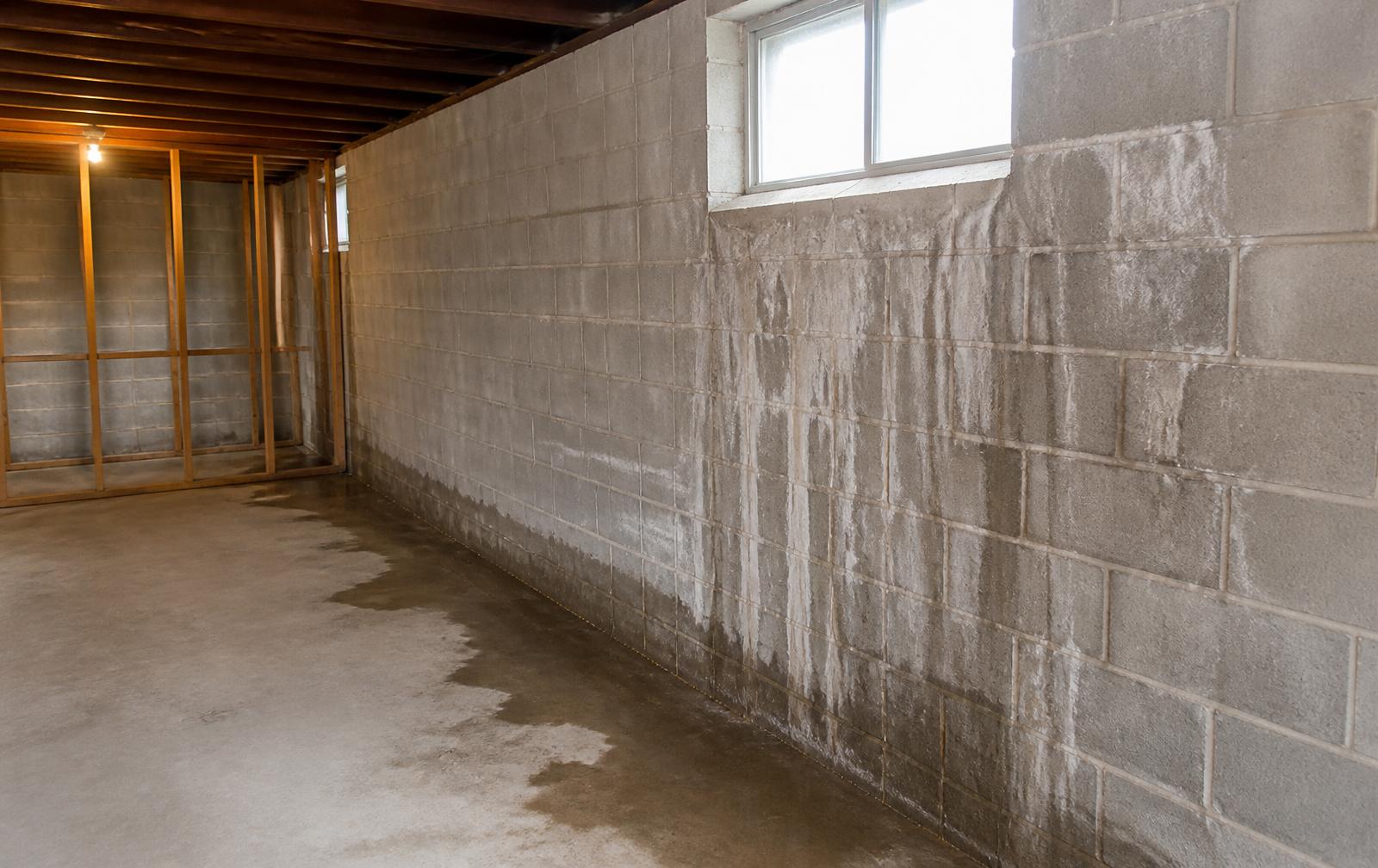
What Causes Water in a Basement?
Pennsylvania basements get wet for predictable reasons. Long, soaking rains saturate the soil around the foundation. Groundwater rises against the footing. Downspouts dump water two feet from the wall instead of ten. Grading that was fine in 1978 now slopes back toward the house. Add the freeze and thaw cycles that run from December through March in most of the state, and older block, brick and stone foundations start letting water through joints, cracks and the seam where the wall meets the floor.
The frustrating part for homeowners is that the water rarely shows up in the same place it gets in. A damp spot in the middle of the floor can start six feet away at a cracked footing. A puddle under the stairs can trace back to a clogged discharge line outside. That is why the first useful step is almost never a product — it is having someone stand in the basement, look at the wall, the slab, the sump and the exterior grade, and tell you where the water is coming from.
Most Pennsylvania basement water problems come down to a handful of fixes: wet basement repair that starts with the symptom, interior basement drainage systems, French drain installation, sump pump installation, foundation crack repair, or exterior waterproofing when the wall itself needs protection. Which one applies depends entirely on where the water is coming from.
Basement Fix Pros exists to make that first step easy. Tell us what you are seeing, give us a ZIP code, and we hand the request to a waterproofing professional who works in your area. You get a free estimate. You are not committed to anything.
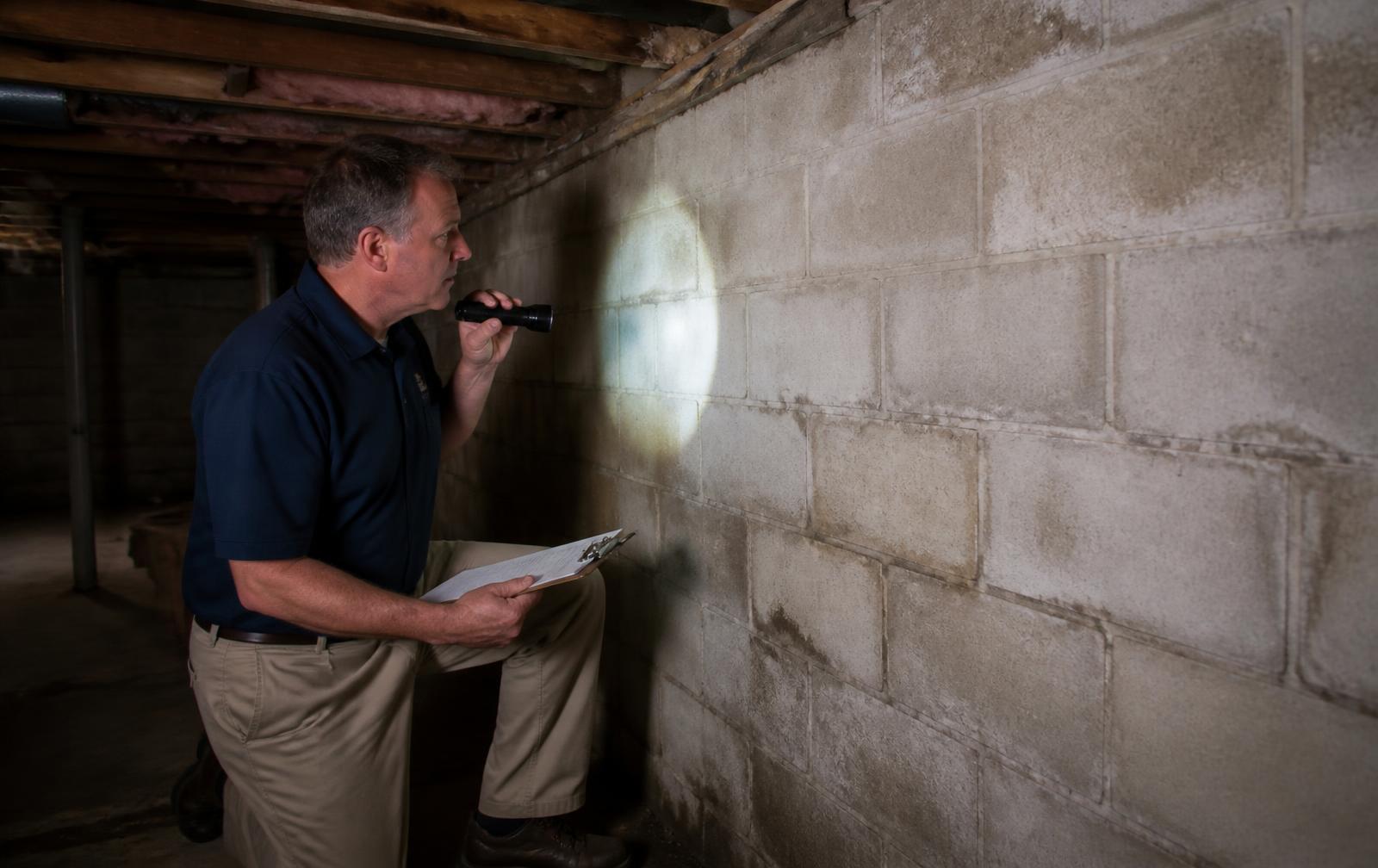
Signs Your Basement Needs Waterproofing
- Water after heavy rain. Water that appears within hours of a storm and disappears a day later is still water intrusion — it points to drainage or hydrostatic pressure.
- Damp streaks or white powder on the wall. Efflorescence means water has been moving through the masonry and leaving minerals behind.
- Water at the wall-floor joint. The cove joint is the single most common entry point in block and poured basements.
- A sump pump that runs constantly — or never. Both are symptoms: one of volume, the other of a failed float, clogged pit or blocked discharge.
- A musty smell, peeling paint or rusting appliance feet. Persistent humidity is water you cannot see yet.
- Cracks that widen, stair-step or weep. A crack that leaks is a waterproofing issue; a crack that moves needs a structural opinion first.
Interior vs Exterior Basement Waterproofing
There is no single "basement waterproofing" product. Professionals choose between managing water from the inside, blocking it from the outside, or repairing a specific entry point. The right answer depends on where the water is coming from, what the foundation is made of, and how accessible the outside of the wall is.
- Interior basement waterproofing collects water that reaches the basement and routes it to a pump. It is the most common approach in dense neighborhoods where excavation is impractical.
- Exterior basement waterproofing excavates down to the footing, cleans the wall, applies a membrane and rebuilds the drainage. It costs more and it stops water before it reaches the wall.
- A basement French drain — drain tile in gravel below the slab — is the collection backbone of most interior systems.
- Sump pump installation gives the collected water somewhere to go, with a properly sized pit, check valve and discharge run.
- Foundation crack repair seals a single leaking crack by injection — the least invasive fix when the crack is the only source.
How Much Does Basement Waterproofing Cost in Pennsylvania?
Most homeowners want a number before they want a diagnosis. Broadly: sealing one leaking foundation crack runs a few hundred dollars, a sump pump replacement runs into the low thousands, and a full interior system for a typical Pennsylvania basement usually lands somewhere between $3,000 and $10,000 depending on linear footage and access. Exterior excavation work is the most expensive category. Our basement waterproofing cost guide breaks each of those down with 2026 ranges and explains what pushes a project to the top of its range.
Find the Right Basement Repair for Your Symptom
If you already know how the water shows up, start there — those pages explain the likely causes and which repairs typically apply.
- Wet basement repair — recurring dampness, humidity and water you keep mopping up.
- Basement leak repair — an active leak through a wall, joint or pipe penetration.
- Water in basement after rain — water that arrives with the storm and leaves with it.
Basement waterproofing services
Each service page covers the warning signs, how the work is done, when it is the right method and what affects the price.
Basement waterproofing by city
Local housing stock, foundation types and drainage conditions change what your basement needs. Start with your city.
Water problems and pricing
How to Get a Basement Waterproofing Estimate
- Describe the problem. Pick the option that matches what you see, or choose "Not sure."
- Add your ZIP code and one way to reach you. Phone or email — you do not need to give both.
- Talk to a local pro. They follow up, ask a few questions and schedule a free on-site estimate.
That is the whole process. No account, no fees, and no obligation to move forward with anyone you speak to.
Frequently asked questions
- Is Basement Fix Pros a waterproofing contractor?
- No. Basement Fix Pros is a free matching service. You describe your basement water problem and your ZIP code, and we pass the request to a local waterproofing professional who works in that part of Pennsylvania.
- What does it cost to submit a request?
- Nothing. The request and the estimate are free, and submitting the form does not obligate you to hire anyone or accept any quote.
- How soon will someone contact me?
- Most requests are followed up within one to two business days. If your basement is actively flooding, say so in the details field so it can be treated as urgent.
- Do I need to know what is wrong with my basement?
- No. Choose 'Not sure' if you only know that water is getting in. Diagnosing the water source is part of what a professional inspection is for.
- Why does my basement leak only when it rains?
- Rain-triggered leaks almost always trace to water management outside: gutters, downspouts, grading, or soil that saturates and pushes water against the wall. Those leaks are usually the least expensive kind to solve, because the fix often starts above ground.
- Is basement waterproofing done from inside or outside?
- Both are legitimate. Interior drainage relieves water once it reaches the footing and is the common choice for cove-joint seepage and homes with no exterior access. Exterior waterproofing protects the wall itself and intercepts water before it arrives, and it costs more because of excavation.
- Which parts of Pennsylvania are covered?
- We currently focus on Philadelphia, Pittsburgh, Allentown, Harrisburg, Lancaster, York, Reading and Scranton, plus the surrounding suburbs and townships in those metro areas.