What Causes Wet Basements in Pittsburgh?
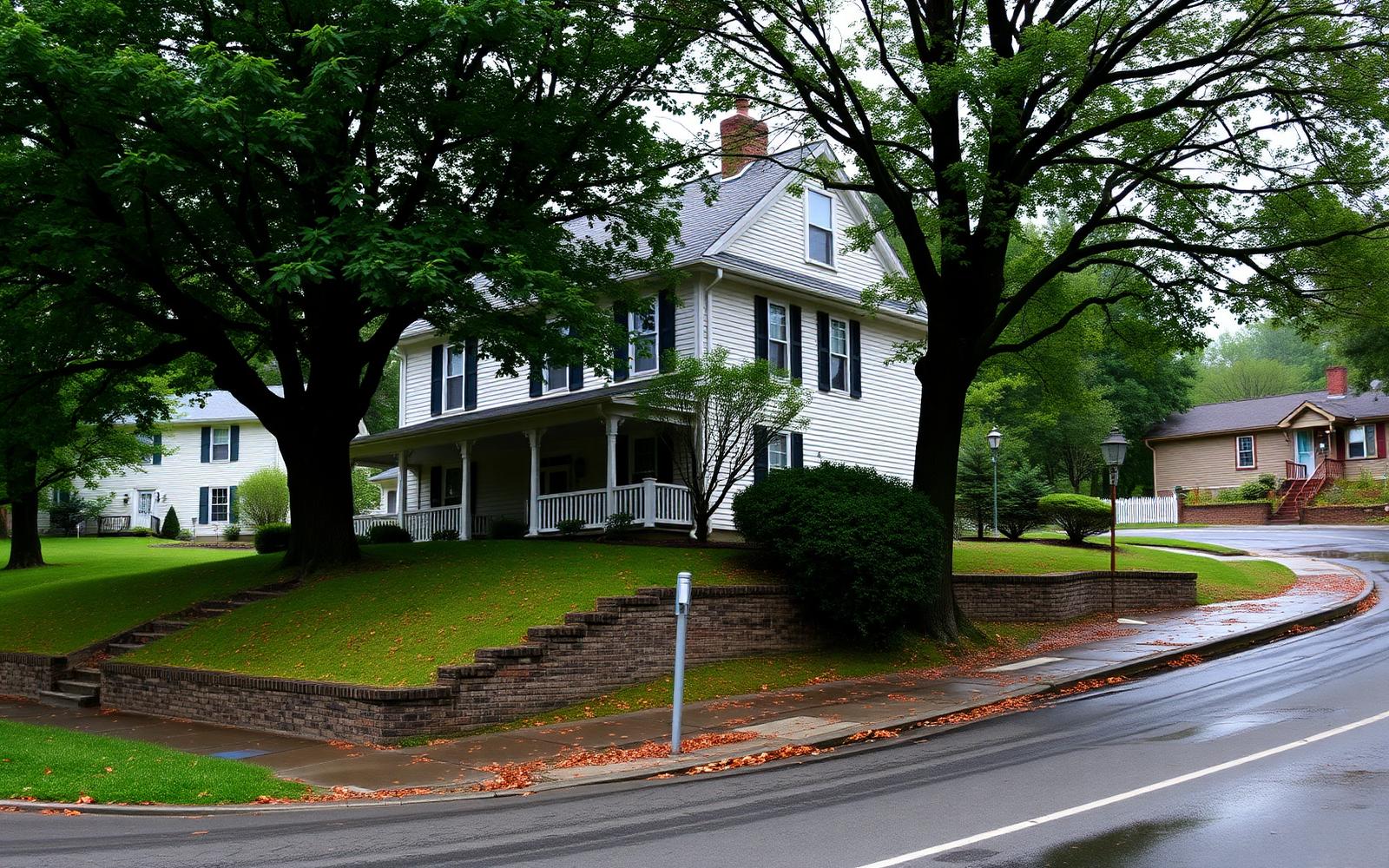
Pittsburgh's topography is the defining factor in its basement water problems. Homes are built into hillsides, and the wall cut into the slope takes enormous lateral soil and water pressure while the downhill side may be nearly at grade. That asymmetry is why so many Pittsburgh basements are wet on exactly one wall — the uphill one.
Add the region's clay-heavy soils, which hold water rather than draining it, and you get sustained pressure against foundation walls for days after a storm. Many houses in the city and the river valleys are also 80 to 120 years old, with block or stone walls and either no original footing drain or one that silted shut generations ago.
Deep basements are common here too. Greater depth means greater hydrostatic pressure at the base of the wall, and it also raises the cost of exterior excavation — which is why accurate diagnosis matters more in Pittsburgh than almost anywhere else in Pennsylvania.
Pittsburgh Housing Stock and Foundation Types
Hillside homes with retaining-wall foundations
Where the foundation doubles as a retaining wall, water and soil pressure act on it constantly. These are the walls most likely to bow or crack horizontally, so a structural opinion should come before waterproofing.
Concrete block basements
Block walls in the South Hills, North Hills and river boroughs fill through their hollow cores. Interior drainage with weep holes or a base channel drains those cores instead of letting them exit at the bottom course.
Century-old stone and brick foundations
In Lawrenceville, Bloomfield, the South Side and Northside, rubble stone walls with deteriorated mortar transmit water through the wall body. Repointing plus a wall liner tied to drainage is the usual approach.
Homes with steep or no driveway access
Access is a genuine cost factor here. Where an excavator cannot reach the uphill wall, exterior work becomes hand-dug and expensive, shifting the value equation toward interior systems.
Local Soil, Drainage and Weather Conditions
- Hillside lots concentrating slope runoff at the uphill foundation wall
- Clay soils that hold water and expand against walls
- Deep basements with high hydrostatic pressure at the footing
- Older housing with failed or absent original footing drains
- Freeze-thaw cycling that widens cracks each winter
- Steep, narrow lots limiting equipment access for excavation
- Aging municipal storm and sanitary lines in older boroughs
- River valley neighborhoods with seasonally high water tables
Most Common Basement Problems in Pittsburgh
- Water pouring in along the uphill basement wall after storms
- Bowing or horizontally cracked block wall on the hill side
- Sump pump that cannot keep up during heavy rain
- Seepage through mortar joints in a stone foundation
- Water in a deep basement two days after the rain stopped
- Runoff from a neighbor's higher property entering the yard
Basement Waterproofing Cost in Pittsburgh
| Work | Typical range | What drives the price |
|---|---|---|
| Interior drainage, uphill wall only | $3,500 – $7,000+ | Wall length, slab thickness, sump location |
| Full perimeter interior system, deep basement | $7,000 – $12,000+ | Depth, footage, wall liner, new pit |
| Exterior waterproofing, hillside wall | $6,000 – $14,000+ | Depth, access, hand digging, restoration |
| Yard drainage and slope interception | $1,500 – $7,000+ | Swales, curtain drains, discharge routing |
| Sump pump with battery backup | $1,200 – $3,500+ | Lift height, inflow volume, backup capacity |
Actual prices vary based on basement size, foundation type, water source, access, drainage requirements, excavation needs and chosen waterproofing method. Compare methods statewide in the Pennsylvania cost guide.
Neighborhoods and Nearby Areas Covered
Professionals in the network serve the City of Pittsburgh — Squirrel Hill, Shadyside, Lawrenceville, Bloomfield, the South Side, Brookline, Mount Washington, Northside and the East End — plus the North Hills, South Hills, Mon Valley, Sewickley, Bethel Park, Monroeville and surrounding Allegheny County communities.
Areas & ZIP Codes We Serve
Serving homeowners throughout Allegheny County and the surrounding river valleys, including 15201, 15206, 15213, 15217, 15224, 15232, 15236 and 15243, plus surrounding communities. Local area codes are 412 / 878 — enter your ZIP code in the form and your request goes to a professional who works in Pittsburgh regularly.
Which service do you need?
Frequently asked questions
- Why is only one wall of my Pittsburgh basement wet?
- Almost always because it is the uphill wall. Slope runoff and groundwater move downhill through the soil and stack up against the first obstruction they hit — your foundation.
- My block wall is bowing. Do I need waterproofing or structural repair?
- Both, in that order: stabilize first, then waterproof. Carbon fiber, wall anchors or bracing address the movement; drainage removes the pressure that caused it.
- Can yard drainage alone fix a hillside water problem?
- Sometimes. A curtain drain uphill of the house can intercept a large share of slope water before it reaches the foundation. It works best combined with proper grading and downspout routing.
- Is exterior waterproofing realistic on a steep lot?
- It depends entirely on access. If machinery can reach the wall, yes. If the dig has to be done by hand at depth, costs climb quickly and interior drainage usually delivers better value.
- Does clay soil change the approach?
- It raises the importance of drainage over sealing. Clay holds water against the wall for days, so relieving pressure with drain tile matters more than any coating applied to the surface.