How Does a Sump Pump Work?
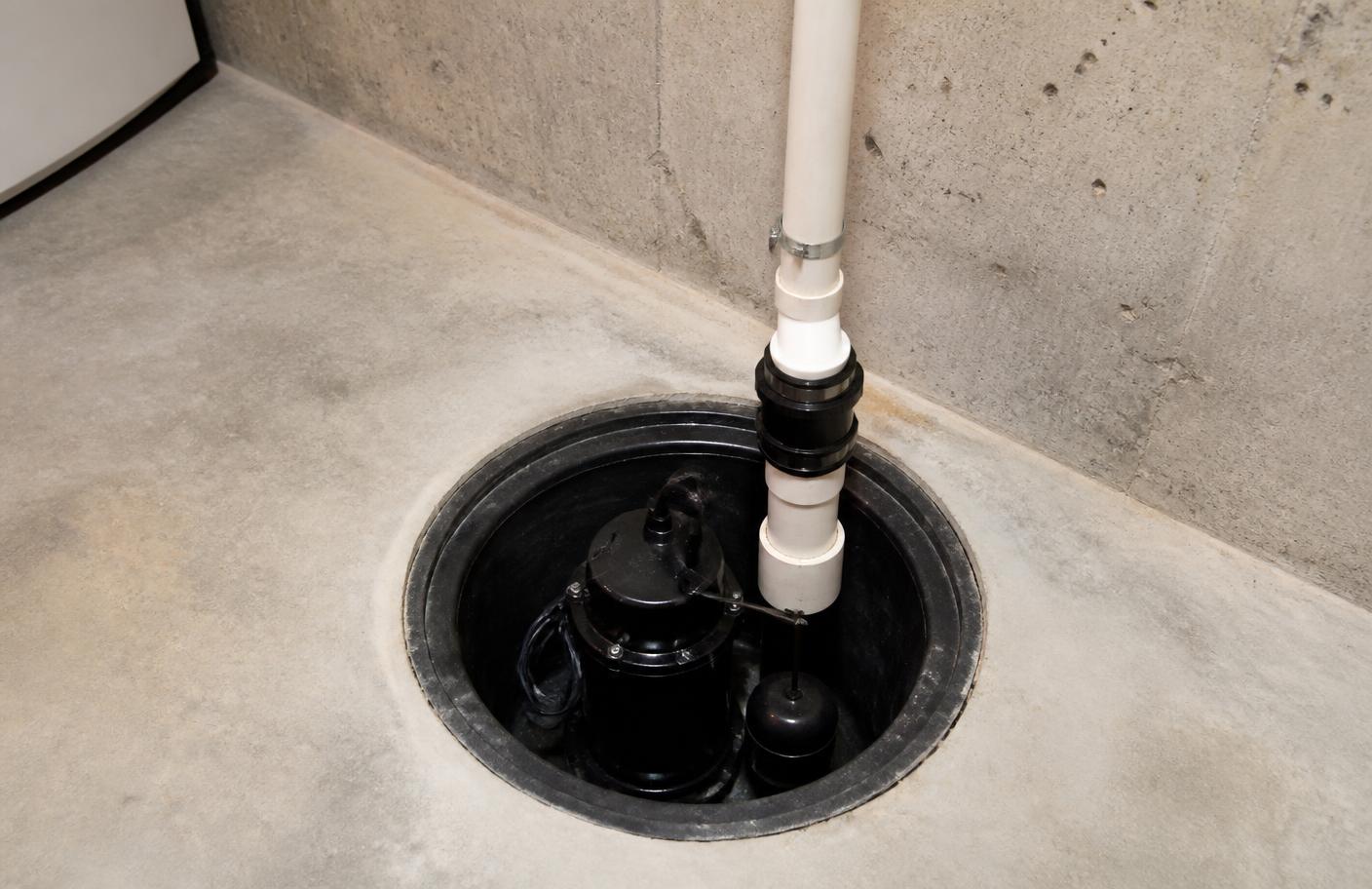
A sump pump does not waterproof anything. It empties a pit. Groundwater and drain water collect in that pit, a float switch detects the rising level, and the pump lifts the water through a discharge line and out of the house. It is the outlet for the whole drainage system — which is exactly why a failed pump turns a dry basement into a flooded one in a few hours.
Adding a pump to a basement with no drainage feeding the pit rarely helps. If water crosses your floor to reach the pit, you need collection — drain tile — as well as pumping.
Signs Your Sump Pump Needs Replacement
- The pump runs constantly, or cycles on and off every minute
- Grinding, rattling or humming without water moving
- Visible rust, scale or a pit full of silt and debris
- The basement floods while the pit sits full and the pump is silent
- Water in the pit that never drops even after the pump runs
- The pump is more than ten years old and has never been serviced
- Discharge water pooling next to the foundation and coming right back in
Why Sump Pumps Fail
- Power loss. The severe storm that fills the pit is the same storm that drops the power line.
- Switch failure. Float switches jam against pit walls, piping or debris — the most common single failure.
- Undersized pump. A pump that cannot keep up with inflow runs continuously until it burns out.
- Bad check valve. Water in the discharge line falls back into the pit and the pump re-pumps the same water forever.
- Frozen or crushed discharge line. Pennsylvania winters freeze shallow discharge runs; lawn equipment and vehicles crush them.
- Debris and silt. An unlined or uncovered pit fills with sediment that wrecks the impeller.
How Sump Pump Installation Works, Step by Step
- Pit location and sizing. The pit goes at the low point, sized for both storage volume and the pump body.
- Slab work. For a new pit, concrete is cut and soil excavated; a lined basin with a sealed lid is set in stone.
- Pump selection. Horsepower is chosen from inflow rate, lift height and discharge run length. Cast iron bodies and solid-state or vertical float switches last longer than the cheapest builder-grade units.
- Discharge piping. Rigid PVC, a check valve above the pump, and a run that exits well away from the foundation — with freeze protection.
- Dedicated circuit. A pump should not share a circuit with the freezer and the shop vacuum.
- Backup. A battery or water-powered secondary pump takes over when power or the primary pump fails.
- Sealed lid. A gasketed cover controls humidity, radon and odors and keeps debris out.
Is a Sump Pump Enough for a Wet Basement?
Replace the pump when the pit fills properly and the pump is simply old, weak or failing. Move to a full system when water reaches the floor before reaching the pit, when several walls seep, or when there is no drainage feeding the pit at all — see interior basement waterproofing. If your basement floods suddenly during storms, start with basement flooding.
How Much Does Sump Pump Installation Cost?
| Work | Typical range | What drives the price |
|---|---|---|
| Sump pump replacement (existing pit) | $500 – $1,400+ | Pump horsepower, switch type, piping condition |
| New sump pit and pump installation | $1,000 – $3,000+ | Breaking slab, pit depth, discharge run length |
| Battery backup system | $700 – $2,000+ | Battery capacity, charger, secondary pump |
| Water-powered backup pump | $800 – $1,800+ | Municipal water pressure, plumbing connection |
| Discharge line extension or burial | $300 – $1,500+ | Run length, freeze protection, outlet point |
Actual prices vary based on basement size, foundation type, water source, access, drainage requirements, excavation needs and chosen waterproofing method. More in the cost guide.
What Affects Sump Pump Installation Cost
- Whether an existing pit can be reused
- Pump horsepower, body material and switch type
- Backup pump type and battery capacity
- Electrical work for a dedicated circuit
- Discharge length, burial depth and freeze protection
- Emergency or after-hours service
Related pages
Basement Waterproofing by Pennsylvania City
Local pages with the foundation types, soils and drainage issues specific to each area.
Frequently asked questions
- How long does a sump pump last?
- Most primary pumps last 7 to 12 years. A pump that runs constantly during wet seasons wears out faster, and a pump that never runs can seize. Testing it twice a year takes two minutes and prevents most surprise failures.
- Do I need a battery backup pump?
- In Pennsylvania, storms that produce the most water are also the storms that knock out power. If your basement floods when the pump stops, a battery or water-powered backup is inexpensive insurance compared to the damage.
- What size pump do I need?
- Sizing depends on how much water reaches the pit and how high the pump has to lift it. A 1/3 HP pump handles many homes; deeper basements, long discharge runs and heavy inflow call for 1/2 HP or more. Oversizing causes short-cycling, so it is a calculation, not a guess.
- Why is my sump pump running constantly?
- Common causes are a high water table, a stuck float switch, a failed check valve letting water return to the pit, or a discharge line that drains right back toward the foundation. Constant running is a warning sign worth diagnosing.
- Can I discharge into my sewer or a floor drain?
- No. Discharging groundwater into a sanitary sewer is prohibited in most Pennsylvania municipalities and can cause backups. The line should run outside and away from the foundation.