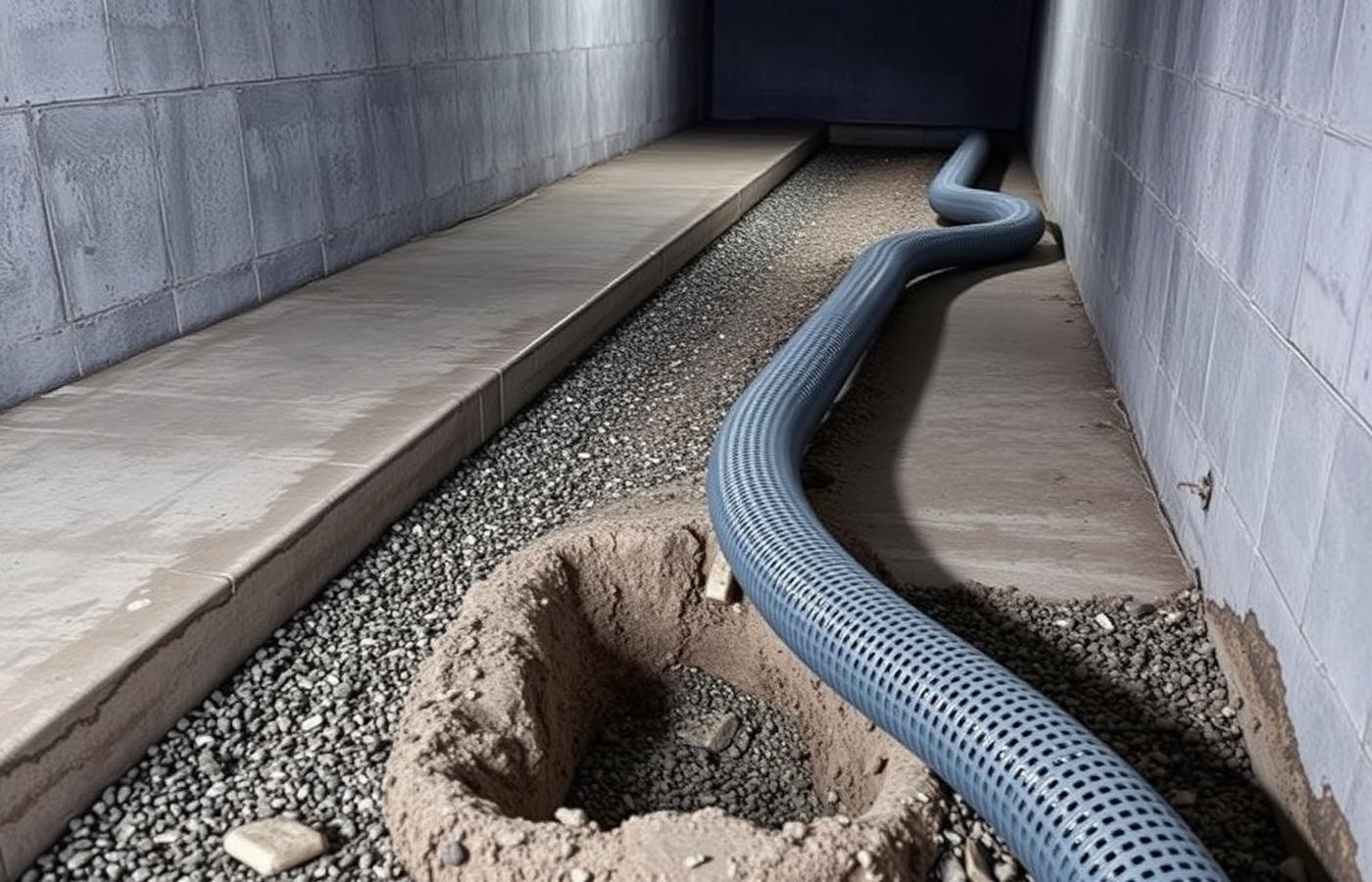
What Is a Basement French Drain?
A French drain is a simple idea executed carefully: perforated pipe laid in a bed of clean washed stone, positioned lower than the water you want to move, sloped toward an outlet. In a basement it is installed either below the slab along the inside of the footing, or outside the foundation beside the footing. Water follows the stone into the pipe, and the pipe carries it to daylight or a sump pit.
It is the workhorse of nearly every drainage-based waterproofing system in Pennsylvania, because it addresses the actual mechanism of a wet basement — water under pressure looking for the easiest path. Given an easier path than your cove joint, it takes it.
Signs Your Basement Needs Drain Tile
- Water seeping in where the floor meets the wall, on one or several walls
- Water rising up through floor cracks or the slab's control joints
- Wet perimeter with a dry center of the floor
- A sump pit that never fills while the floor still gets wet
- Damp block walls with staining in the bottom courses
- Seepage that shows up hours after rain begins and lingers for days
Why Stone Bedding and Slope Determine Whether It Works
A French drain fails for one of three boring reasons: the wrong backfill, no meaningful slope, or no clean-out. Sand and screenings pack around the pipe and stop water from reaching it. Flat pipe holds standing water and silt. A buried line with no access point cannot be flushed when it does silt up. When you compare quotes, ask what stone is specified, whether filter fabric is used, and where the clean-out will be.
How a Basement French Drain Is Installed
- A strip of the slab is saw-cut along the treated walls and removed.
- Soil is excavated beside the footing to make room for stone and pipe.
- Perforated pipe is laid in washed stone with fall toward the sump or outlet.
- Block walls get weep holes or a base channel so trapped water can drain in.
- A clean-out riser is set for future flushing.
- The pipe terminates in a sealed sump pit with a pump and check valve.
- Stone is topped off and the slab is patched flush.
This is the core of an interior waterproofing system. Outside the wall, the same pipe becomes the footing drain in exterior waterproofing.
Does a French Drain Stop Basement Flooding?
- Recurring seepage rather than a single leaking crack
- High water table or a hillside lot pushing water at the foundation
- Original footing drains that have silted shut or were never installed
- Multiple entry points along the perimeter
- Homes where landscaping or attached neighbors rule out excavation
If you have one clean vertical crack in a poured wall and no other symptoms, crack repair is likely a better value. If water only arrives during heavy storms and always in the same corner, read water in the basement after rain first.
How Much Does a Basement French Drain Cost?
| Work | Typical range | What drives the price |
|---|---|---|
| Interior French drain | $50 – $120+ per linear foot | Slab thickness, obstructions, spoil removal |
| Exterior footing drain | $40 – $100+ per linear foot | Excavation depth, soil, restoration |
| Typical interior system, average basement | $4,000 – $10,000+ | Perimeter footage, sump, wall liner |
| Yard or surface French drain | $1,500 – $6,000+ | Run length, discharge point, hardscape crossings |
Actual prices vary based on basement size, foundation type, water source, access, drainage requirements, excavation needs and chosen waterproofing method. See the cost guide for full comparisons.
What Affects French Drain Cost
- Linear footage and number of corners
- Slab thickness, reinforcement, and debris disposal
- Whether a sump pit and pump are included
- Utilities and mechanicals in the work path
- Length of the discharge run and how it is buried
- Warranty terms and whether a clean-out is included
Related pages
Basement Waterproofing by Pennsylvania City
Local pages with the foundation types, soils and drainage issues specific to each area.
Frequently asked questions
- What is the difference between a French drain and drain tile?
- Practically nothing. Both describe perforated pipe bedded in washed stone that collects water and moves it by gravity. Contractors use French drain, drain tile, weeping tile and perimeter drain interchangeably.
- Interior or exterior French drain — which is better?
- An interior drain is cheaper, faster and unaffected by landscaping, and it handles cove-joint water very well. An exterior footing drain intercepts water before it reaches the wall, which is better if the wall itself is the problem, but it requires excavation.
- Do French drains clog?
- They can, which is why the stone spec matters. Clean washed stone and filter fabric keep silt out. Interior systems should include a clean-out port so the line can be flushed.
- Does a French drain need a sump pump?
- It needs an outlet. On a sloped lot, gravity can carry water to daylight. On a flat lot or below-grade basement, the drain terminates in a sump pit and the pump does the lifting.
- Can a yard French drain fix my basement?
- Sometimes. A shallow yard drain that intercepts surface water or a downspout discharge can meaningfully reduce what reaches the foundation, but it does not relieve pressure under the slab.