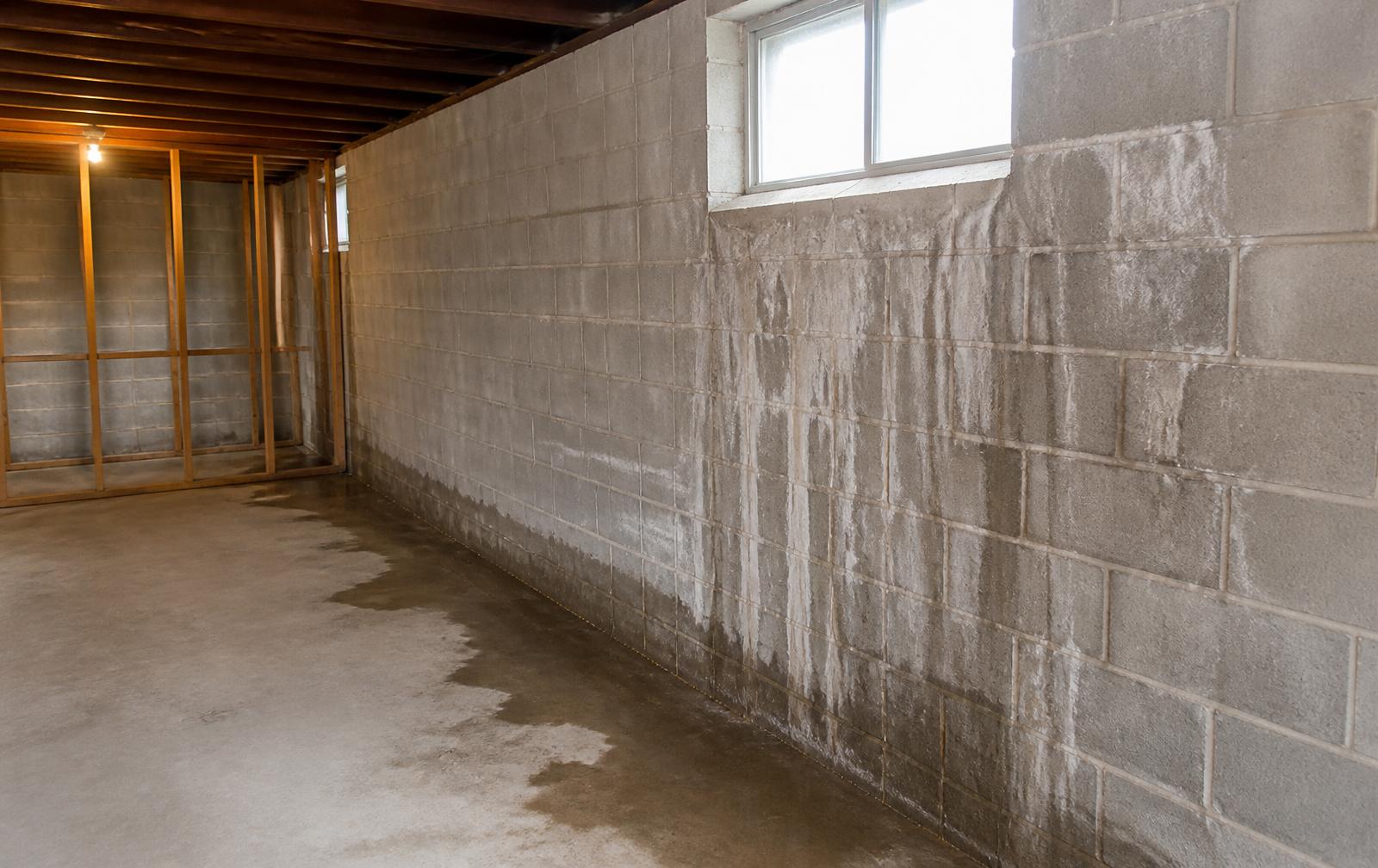
What Causes Wet Basements in Allentown?
Allentown and the wider Lehigh Valley sit on carbonate bedrock — limestone and dolomite. Water moves through fractured rock and solution channels rather than evenly through soil, which produces a frustrating pattern for homeowners: neighbors on the same street can have completely different basement water conditions, and a basement can stay dry for years and then leak persistently after one wet season.
The housing stock adds to it. Allentown has a large inventory of early-to-mid-20th-century twins and rowhomes in the city center, with concrete block foundations that fill through their hollow cores, plus post-war ranches and split levels in the surrounding townships where original footing drains have reached the end of their service life.
Spring is the peak complaint season. Snowmelt over still-frozen ground, followed by March and April rain, raises groundwater across the valley and pushes water into basements that were dry all winter.
Allentown Housing Stock and Foundation Types
City twins and rowhomes
Attached homes in central Allentown limit exterior access much like Philadelphia rowhouses, so interior drainage is the practical route. Shared walls also mean a neighbor's downspout or grading can be the actual source of your water.
Concrete block foundations
Block is the dominant foundation type in the valley. Water fills the cores and exits at the bottom course, which is why weep holes or a base channel feeding into drain tile is standard practice here rather than optional.
Post-war ranches and split levels
In South Whitehall, Whitehall, Salisbury and Emmaus, these homes commonly have original drain tile that is now silted shut, plus grading flattened by 60 years of settlement and landscaping.
Older stone farmhouse cellars
Scattered through the surrounding townships, stone cellars with deteriorated mortar need repointing and wall management, not just floor drainage.
Local Soil, Drainage and Weather Conditions
- Carbonate/limestone geology channeling groundwater unpredictably
- Seasonally high water tables, peaking in early spring
- Snowmelt over frozen ground running straight to foundations
- Concrete block walls that fill through hollow cores
- Attached twins and rowhomes with no exterior access
- Original footing drains at or past end of life in post-war housing
- Rapid suburban development altering runoff patterns in the townships
- Freeze-thaw cycling widening cracks each winter
Most Common Basement Problems in Allentown
- Water along the base of a block wall every spring
- Basement that has been dry for years and suddenly leaks
- Sump pump running nonstop from March through May
- Seepage on the shared wall of a twin home
- Musty smell in a finished basement family room
- White powdery efflorescence spreading across block walls
Basement Waterproofing Cost in Allentown
| Work | Typical range | What drives the price |
|---|---|---|
| Interior drainage with block wall weep system | $4,000 – $8,500+ | Footage, core drainage, new pit |
| Full perimeter interior system | $6,500 – $11,000+ | Whole basement, wall liner, sump |
| Exterior waterproofing, detached home | $5,000 – $12,000+ | Depth, access, restoration |
| Sump pump with battery backup | $1,200 – $3,200+ | Spring inflow volume, discharge run |
| Grading and downspout drainage corrections | $800 – $4,500+ | Soil volume, buried line length |
Actual prices vary based on basement size, foundation type, water source, access, drainage requirements, excavation needs and chosen waterproofing method. Compare methods statewide in the Pennsylvania cost guide.
Neighborhoods and Nearby Areas Covered
Professionals in the network serve Allentown, Bethlehem, Easton, Emmaus, Whitehall, Catasauqua, Coplay, Macungie, Trexlertown, Fogelsville, Northampton, Nazareth and surrounding Lehigh and Northampton County communities.
Areas & ZIP Codes We Serve
Serving homeowners throughout the Lehigh Valley, including 18101, 18102, 18103, 18104, 18109, 18015, 18017 and 18049, plus surrounding communities. Local area codes are 610 / 484 — enter your ZIP code in the form and your request goes to a professional who works in Allentown regularly.
Which service do you need?
Frequently asked questions
- Why does my Allentown basement only leak in spring?
- Snowmelt on frozen ground plus spring rain raises the water table across the valley. Once groundwater rises above your footing, pressure pushes water in — and it recedes again in summer.
- Does limestone bedrock affect waterproofing?
- It affects diagnosis more than method. Water travels through rock fractures, so entry points can seem random. A thorough inspection matters, and drainage-based systems handle unpredictable inflow better than sealants.
- My block wall has white crust on it. Is that mold?
- No, that is efflorescence — mineral salts left behind as water evaporates out of the block. It is proof water is moving through the wall, which is useful diagnostic information.
- Can both halves of a twin be waterproofed together?
- Yes, and it is often cheaper per home. If you and your neighbor share the water problem, ask contractors to quote both sides.
- Is sinkhole risk a concern in the Lehigh Valley?
- Carbonate geology does mean sinkholes occur regionally. If you see soil subsiding, a depression forming, or water disappearing into the ground near the foundation, mention it — that needs a different kind of evaluation than routine waterproofing.